 Kliky
Kliky


What is screen mirroring?
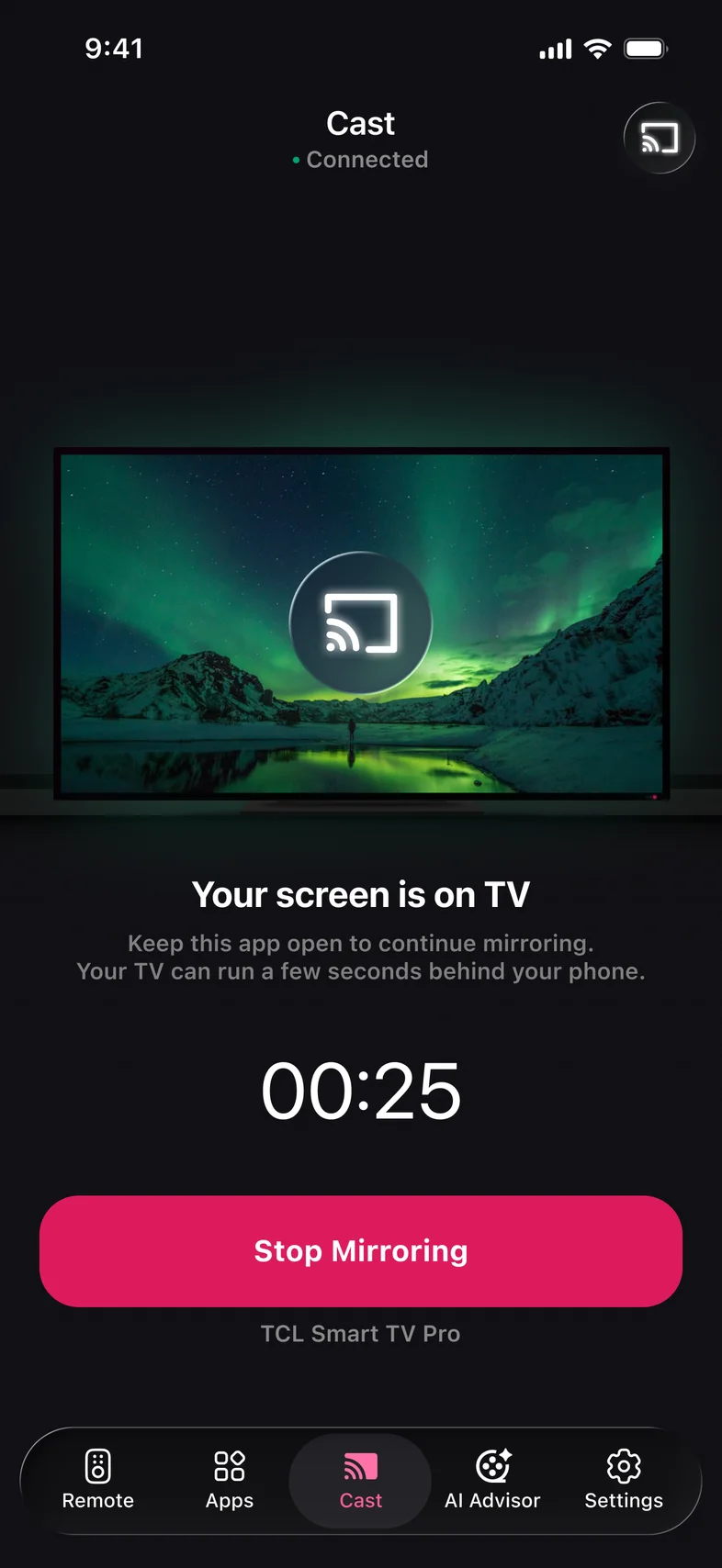
Screen mirroring shows exactly what’s on your phone on your TV in real time: apps, photos, games, even the home screen. It works over your home Wi‑Fi, so you don’t need an HDMI adapter. Smart TVs accept mirroring through one of several protocols: AirPlay, Miracast, DIAL or DLNA.
Kliky picks the right protocol for your TV automatically. You never have to know which one your Samsung, LG or Roku uses. You tap one button and the picture appears.
Screen mirroring vs casting: what’s the difference?
With casting, your phone sends a link and the TV plays the video itself. That’s great for YouTube or Netflix, and your phone stays free. With mirroring, the phone streams its whole screen, which you need for photos, presentations, games and apps that can’t cast.
- Use casting for long videos. It saves battery and keeps quality high.
- Use mirroring for anything interactive or anything that isn’t a video.
How to mirror an iPhone to a TV without Apple TV
Many 2019+ Samsung, LG, Sony and Vizio TVs support AirPlay 2 natively. For every other TV, Kliky converts your iPhone’s screen recording into a stream the TV understands:
- Open Kliky and tap Mirror.
- Select your TV, then tap Start Broadcast in the iOS prompt.
- Rotate your iPhone for full‑screen landscape video.
How to mirror Android to a TV
Android phones mirror through the same flow.
Why is screen mirroring lagging or black?
Lag almost always comes from Wi‑Fi congestion. Move your phone to the 5 GHz band and close other streams. A black screen with sound means the app you’re showing blocks mirroring for copyright reasons. Netflix and Disney+ do this, so cast them instead.